

Thomas Forster
Thomas Forster’s New Children’s Book “My Daddy Can Fly!” Celebrates Men in Ballet
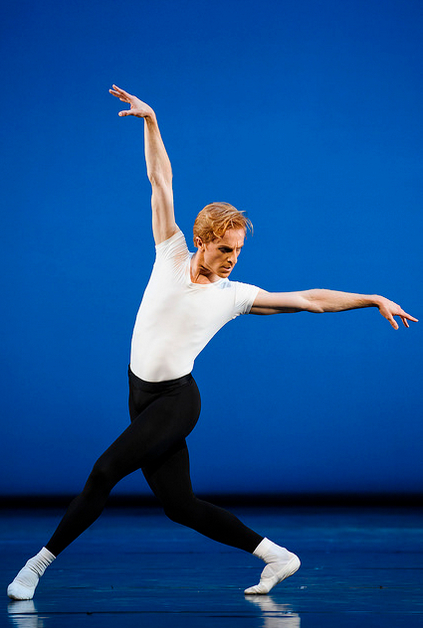 Royal Ballet’s Steven McRae on Facebook:
I AM A MAN
#internationalmensday
.
I am a MAN who:
Wears tights for a living
🔸Tries to be a good Father to my 3 children
🔸Adores his beautiful wife in an equal marriage
🔸Doesn’t feel the need to conform to the gender stereotypes that society STILL generates
🔸Can cry when he needs to
.
My hope is that my children will grow up in a world that Men & Women can be WHOEVER they want to be and do WHATEVER they love to do……..
I wish we lived in a world where every time I met someone new & told them what I do for a living that they would respond in the same way as they would if I told them I was a Banker….. Yes I am a Man who Dances, but I am a human first and foremost…. When will a Man who does Ballet for a living not generate an awkward response? When will people accept that we all like to do different things?
.
Today is an opportunity to remind ourselves of the importance we ALL have on influencing the next generation in a positive way…… Let’s celebrate each individuals choices rather than feeling the need to stick a label on everyone and what they do!
.
YOU BE YOU & I’LL BE ME……. NOW LETS CELEBRATE THAT!
 Brad Willcuts
 Peter de Grasse
A year in the life:
What I wanted most in the world was to do the hard physical work of daily classes and rehearsals, and to dance side-by-side with friends who were outstanding at what they did. When I arrived at Sacramento Ballet I believed I had found what I wanted. I’ll never forget the feelings of camaraderie and joy that came with the company classes in Sacramento. And I’ll never forget the friends who helped me get there.
Years before, while launching her New York dance career, my friend Marta had stayed in my Jersey apartment, and the bond we’d formed had grown into an iron-clad loyalty. Now, with ten dollars to my name, I’d ridden down to California with her in her trusty pick-up. She helped me move my few small possessions into the apartment, bought me a cheap taco at a kiosk nearby, hugged me with a vigorous “Merde!” and headed north on the interstate. Though I’d barely realized it at the time, with all my money committed to a deposit on the apartment, and no paycheck to my name, I’d eaten my last meal for two days.
Just prior to the start of rehearsals, an east-coast friend wired me forty dollars for groceries so I could dance strong on the first day. I was nervous that I would not be able to perform well in class..but the body has its animal resources, and the first day of dancing somehow restored me, heart and soul. In the mystical fog and shining sun of Northern California, intense performances, wild times, and deeply made friendships rounded out the year. But that spring, due to political dynamics, money problems within the company, and controversy over whether I was a fit, my contract was not renewed.
Fearing eviction from my apartment on the eve of traveling for a job in Connecticut, I made the snap decision to quit my room and pocket the rent. By the time the clock ran out on my east coast gig, I vowed to myself, I would have housing and long term work. As with so many dancers, audition after audition left me empty handed. And yet I scraped together enough money to fly out to Seattle for a workshop with Donald Byrd. A friend in Donald’s company who’d recommended I audition there hosted me in her apartment, and with only a week of work remaining, I gave the audition everything I had.
Once I was hired, the practical challenges I’d faced paled in comparison to the artistic trial-by-fire of dancing for Donald. He demanded total honesty, total authenticity. There was no holding back; not physically, not emotionally.
It is said among dancers that we leave everything at the studio door. But in fact we bring everything with us, and leave it on the floor. It’s what we call soul, and with Donald, soul was our daily bread. The art form, he taught us, was worthy of nothing less.
During my first winter season in that rainy city I got a call from a friend and mentor who was battling cancer and would not be able to guarantee her performance for a special event in honor of Matthew Shepard. Could I make a solo in his honor and stand in? Yes I’ll do it, I’d told her. But privately I asked myself what I could possibly offer from my own experience as a man. While men faced barriers of entry to the dance profession due to a few petty gender stereotypes, those stereotypes were small in view of the male privilege and special status conferred to male dancers within the profession. I’d faced some challenges, sure, but nothing like the adversity of being gay in the rural United States. I was alive, wasn’t I?
On reflection, however, I realized what life proves true again and again: we do nothing alone. Without friends and colleagues reaching out to me, I would not have had a career; I would not have made it. Nor would any of us. So in my solo for Matthew I reached out to him, and I did so by putting myself in his shoes.
While I never met Matthew, his mother told me after the performance that she’d seen him in me as I danced that day. Other audience members thanked me, confessed to me, told me they were spellbound. Through Matthew, I was delivering back what I had learned from Donald Byrd. For me, on stage, it felt as if I were simply a bridge, a human link, a conduit for a connection that needed to be made, one that had nothing to do with me. And in the moment I performed that piece I returned everything I owed to the friends who’d helped me along the way, by sharing with the public everything that their generosity had allowed me to share.
If I can offer a message for aspiring male dancers, it is to have faith, and reach out. Your people are here; your network is here. Your skills and talents are needed. And making the connection is more than worth it. Making the connection is everything.
Peter de Grasse is a teacher, solo performer, and choreographer who trained at Juilliard and the San Francisco Ballet School. He collected company credits at American Repertory Ballet, Sacramento Ballet, BalletX, and Spectrum Dance Theater before becoming a soloist and choreographic collaborator at Staatstheater Darmstadt in Germany, where he closed his company career in 2012. Tracing his roots to the rave scene of the late 90s and early 2000s, and working with popping and West Coast street styles as his daily practice, Peter continues to dance and present work at various festivals, jams, and events in Europe, the United States, and Asia. Built on a platform of hybrid movement vocabulary, his choreographic practice grafts spiritual esoterica, Tanztheater, and text into psychic collages designed for intimate venues. He currently serves as
Senior Adjunct Assistant Professor of Dance at Whitman College. He holds a BFA in Dance from Juilliard and an MFA in Choreography from Jacksonville University.
Alex

I’m 18 years old and I started transitioning in 7th grade. I was born in Russia and was adopted when I was a year and half. I started volunteering at Special Gifts Theatre in 7th grade, and this year I will have done SGT for 6 years. I’m hoping to go into special education teaching when I go to college.
How has danced helped you as a young person transitioning?
Dance helped me by giving me a way to express what I need to express without necessarily knowing how to explain the feelings I was feeling in words. I could go into my room after a long, mentally exhausting day at school where people called me by my birth name and she/her pronouns and just dance, I could dance to any type of music I needed to; if I was feeling angry I had a way to get it out, same thing if I was sad or frustrated.
What has been your experience with taking dance in high school?
Dance in school specifically gave me a way to meet new friends and gave me a way to bring my need for expression to school. I’m also able to learn so much more by seeing how my friends can hear a song and find movements that are drastically different then what I would have considered. Being able to use my dance in school performances also give me a sense of belonging, being able to hear people cheer for me as I’m up on a stage makes me feel proud as well as when that happens for my friends.
Do you have any advice for someone who might be struggling with issues related to gender identity?
Do things in your own time, as much as you might want things to get started right away, whether it be starting hormones, or hormone blockers, or any surgery that you might want. It will all happen, but while you wait, find a therapist to talk to about healthy coping strategies for the days your dysphoria might be really bad or when you’re just having an off day.
You work with Special Gifts Theatre*. What motivated you to work with this group, and what has been your experience?
What motivated me to work at special gifts theatre was being able to do the things I enjoy, like helping people and entertaining others. I’m also learning about what it actually means to teach something to someone and how to help them when they need it, but also pushing them when I know that they can do more. SGT also lets me have the theatre experience.
Knowing that these prompts are to be used for a website focused on males, and persons who identify as males, in dance, what other thoughts do you have that weren’t asked here?
That dance isn’t a “Girl” thing it’s simply just another way to express yourself and get amazing exercise.
*Special Gifts Theatre’s mission is to provide individuals with special needs a unique, creative drama experience enabling personal growth, while breaking down stereotypes related to disabilities within the community at large.
Here are some stories from Dance Arts Now!
Dance Arts Now! is the official newsletter of the National Honor Society for Dance Arts™ (NHSDA) Junior and Secondary Programs (for Middle & High School Students). The publication gives student inductees and their chapter sponsors a chance to be published and recognized.
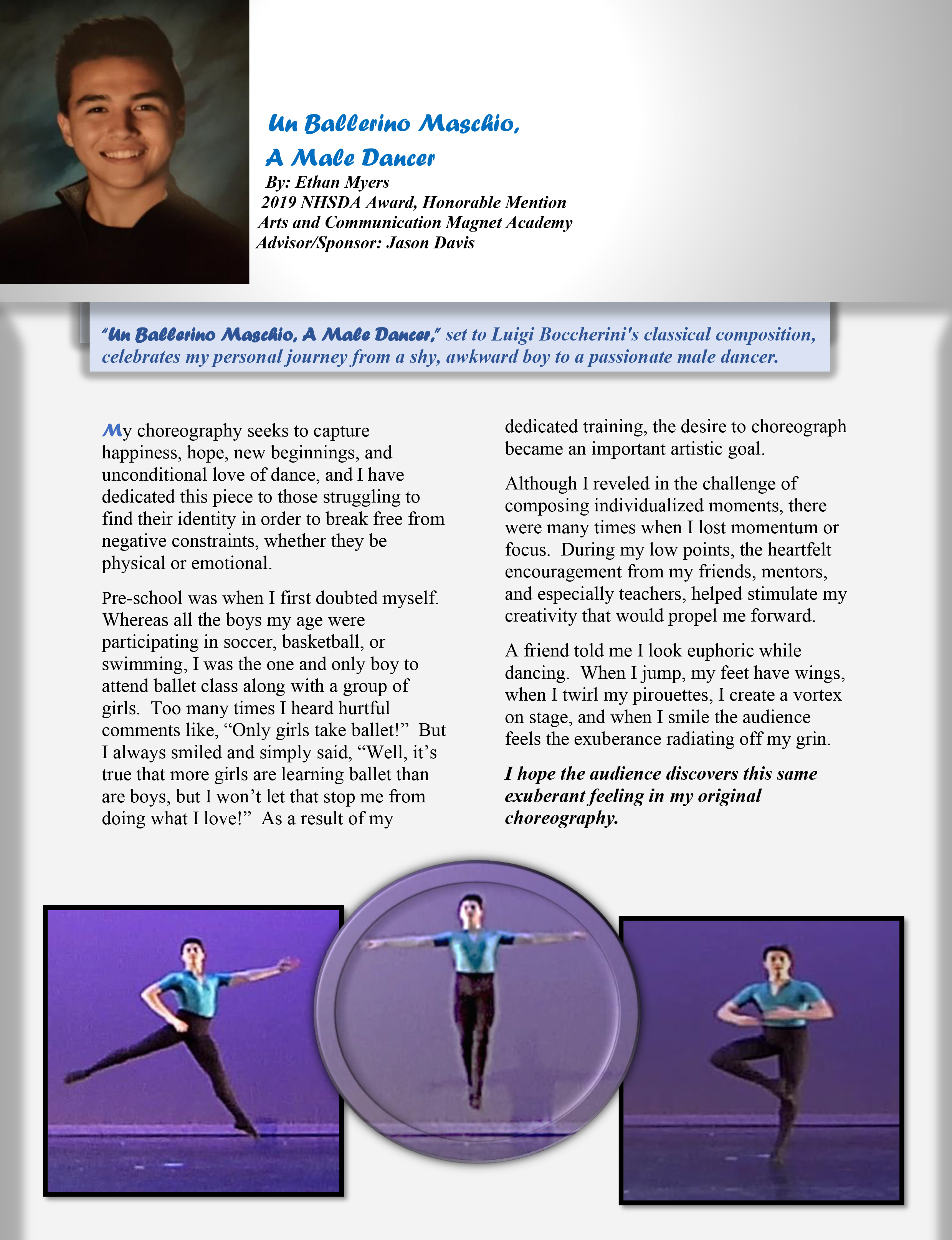
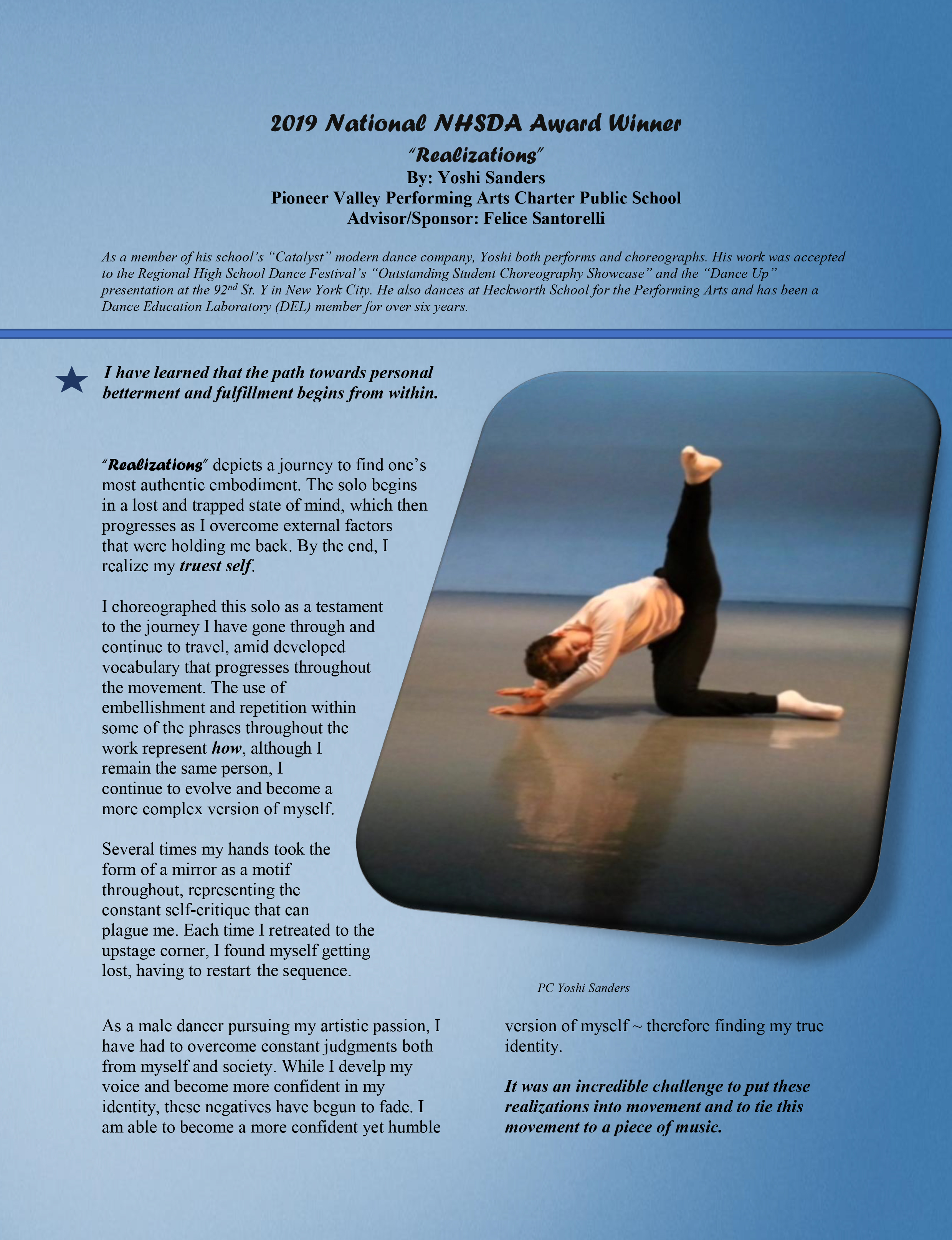

 menindance.net